 111
111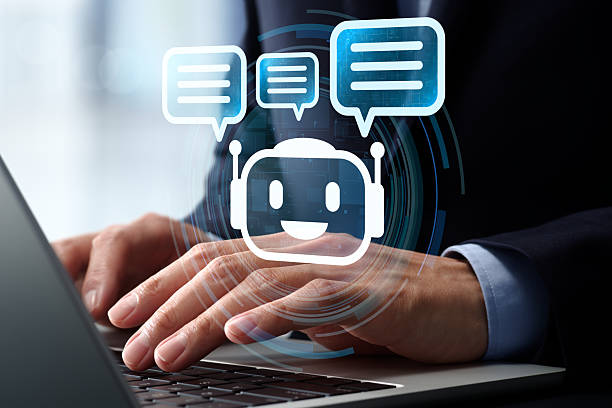 2
2 3
3 4
4 5
5 6
6 7
7 8
8 9
9 10
10 11
11 12
12 13
13 14
14 15
15 16
16 17
17 18
18 19
19 20
20 21
21 22
22 23
23 24
24 25
25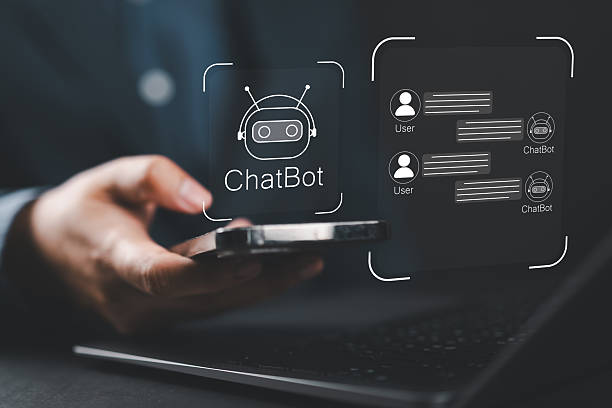 26
26 27
27 28
28 29
29 30
30 31
31 32
32 33
33 34
34 35
35 36
36 37
37 38
38 39
39 40
40 41
41 42
42 43
43 44
44 45
45 46
46 47
47 48
48 49
49 50
50 51
51 52
52 53
53 54
54 55
55 56
56 57
57 58
58 59
59 60
60 61
61Estimated reading time: 10–12 minutes
Understanding AI Chatbots and Their Impact on Modern Customer Service
Customer service has become one of the most important factors influencing whether customers stay loyal to a business or choose a competitor. Consumers expect fast, accurate, and personalized support at any time of day, across websites, mobile apps, social media, and messaging platforms. Meeting those expectations using only human support teams is increasingly difficult and expensive.
Artificial intelligence (AI) chatbots have emerged as one of the most effective solutions. Unlike traditional rule-based chat systems, modern AI chatbots can understand natural language, recognize context, answer complex questions, guide customers through tasks, and seamlessly transfer conversations to human agents when needed.
Organizations of every size—from startups to multinational enterprises—are using AI chatbots to improve customer experiences, reduce response times, lower operational costs, and enable support around the clock.
Customers today expect:
AI chatbots help businesses deliver these expectations at scale while allowing human agents to focus on more complex, high-value interactions.
An AI chatbot is a software application that uses artificial intelligence technologies—such as natural language processing (NLP), machine learning, and generative AI—to communicate with people in conversational language.
Unlike older chatbots that only recognize predefined keywords, AI-powered chatbots can:
Examples include customer support assistants on websites, banking virtual assistants, healthcare appointment bots, and AI-powered shopping assistants.
Modern AI chatbots typically combine several technologies:
NLP enables chatbots to interpret human language rather than relying solely on exact keyword matches.
It helps the chatbot understand:
Machine learning helps improve chatbot performance over time by analyzing interactions and identifying patterns that can enhance future responses.
Many chatbots retrieve information from trusted internal documentation such as:
Modern AI chatbots can connect with:
These integrations allow customers to complete tasks instead of merely receiving information.
Today’s AI assistants can:
Customer expectations have changed dramatically over the past decade.
Consumers increasingly expect:
Long phone queues and delayed email responses often lead to frustration and lost business.
AI chatbots help bridge this gap by providing instant assistance at any time.
One of the most significant advantages is speed.
Instead of waiting several minutes—or even hours—for an agent, customers can receive an answer within seconds.
This is particularly valuable for common requests such as:
Faster responses improve customer satisfaction and reduce support backlogs.
Human support teams typically work in shifts and may not be available around the clock.
AI chatbots can operate continuously, assisting customers during evenings, weekends, and holidays.
This ensures businesses remain accessible to customers in different time zones and helps prevent missed opportunities.
Human agents may occasionally provide inconsistent answers due to misunderstandings or outdated information.
When connected to approved knowledge sources, AI chatbots deliver consistent responses based on the latest available content, improving reliability and reducing confusion.
Many organizations use AI chatbots to answer routine questions such as:
Automating these repetitive interactions frees human agents to focus on complex cases.
A common misconception is that AI chatbots replace human customer service representatives entirely.
In practice, the most successful customer service strategies combine AI with human expertise.
For example:
This collaboration reduces customer frustration by eliminating the need to repeat information and enables support teams to handle more cases efficiently.
AI chatbots are being adopted across many sectors.
Research consistently shows that customers value responsive, helpful service. Businesses that combine AI automation with skilled human support can reduce wait times, improve consistency, and deliver more convenient experiences—factors that contribute to stronger customer loyalty and operational efficiency.
AI chatbots continue to evolve through advances in natural language understanding, generative AI, and integration with business systems. As these technologies mature, chatbots are becoming capable of handling more sophisticated conversations while maintaining a seamless handoff to human agents when empathy, judgment, or specialized expertise is required.
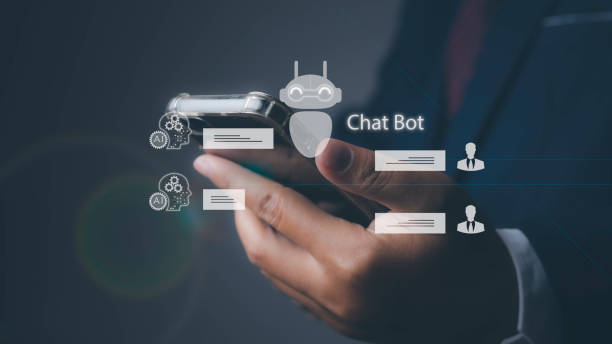
One of the greatest strengths of AI chatbots is their ability to handle thousands of customer conversations simultaneously. Unlike human agents, who can typically assist one customer at a time, AI chatbots can provide immediate responses to many users without increasing wait times.
This scalability is especially valuable during peak periods such as holiday shopping seasons, major product launches, promotional campaigns, or service disruptions. Businesses can maintain a high level of customer support without dramatically increasing staffing costs.
Studies consistently show that customers value quick responses. Long wait times often lead to frustration, abandoned purchases, and lower customer satisfaction. AI chatbots reduce delays by answering common questions within seconds, helping customers continue their journey without unnecessary interruptions.
Modern AI chatbots can deliver personalized support by integrating with customer relationship management (CRM) systems and other business databases.
With appropriate permissions, a chatbot may recognize returning customers and provide tailored assistance such as:
Personalization creates a more engaging experience and can strengthen customer loyalty.
Customer service representatives often spend a significant portion of their day answering repetitive questions.
Examples include:
By automating these routine inquiries, AI chatbots allow human agents to focus on more complex issues that require empathy, critical thinking, or specialized knowledge.
AI chatbots are most effective when used alongside human teams—not as a complete replacement. They handle repetitive, high-volume requests while human representatives resolve sensitive or complicated situations that benefit from personal judgment and empathy.
Today’s customers communicate through a wide range of digital platforms, including:
AI chatbots help businesses deliver a consistent support experience across these channels. Customers can receive timely assistance wherever they choose to interact.
When connected to an up-to-date knowledge base, AI chatbots can provide consistent answers based on approved company information.
This reduces the risk of inconsistent guidance and helps ensure customers receive accurate information about:
Organizations should regularly review and update chatbot knowledge to maintain accuracy.
An AI chatbot is only as effective as the information it can access. Regularly updating help articles, product documentation, and policy information helps ensure customers receive reliable and relevant answers.
Online retailers use AI chatbots to:
These capabilities can improve the shopping experience and reduce cart abandonment.
Financial institutions use AI-powered virtual assistants to help customers:
Sensitive or regulated transactions are typically transferred to secure systems or human representatives.
Healthcare providers use chatbots to:
Medical diagnosis and treatment decisions remain the responsibility of qualified healthcare professionals.
Travel companies use AI chatbots to assist customers with:
During disruptions, chatbots can quickly share the latest information and guide travelers through available options.
Businesses commonly evaluate chatbot performance using key customer service metrics, including:
Monitoring these indicators helps organizations refine chatbot performance and identify opportunities for improvement.
Successful AI chatbot programs are not “set and forget.” Organizations should regularly:
Continuous improvement helps maintain a high-quality customer experience.
Businesses can maximize the value of AI chatbots by following several best practices:
A well-planned implementation is more likely to improve both customer satisfaction and operational efficiency.
Advances in generative AI, natural language understanding, and enterprise integrations are expanding what AI chatbots can accomplish. Future systems are expected to provide more context-aware conversations, multilingual support, and deeper integration with business processes while continuing to emphasize responsible AI practices, privacy, and human oversight.
In Part 3, we will explore implementation challenges, ethical considerations, return on investment (ROI), emerging trends, and case studies from organizations using AI-powered customer service solutions.

AI chatbots have transformed customer service, but successful adoption requires more than simply deploying new technology. Organizations must balance automation with human expertise, protect customer data, maintain accurate information, and continuously improve chatbot performance.
Businesses that approach AI strategically are more likely to achieve long-term benefits while building customer trust.
The most effective customer service strategies combine AI with skilled human agents. Chatbots excel at handling repetitive and routine interactions, while people remain essential for complex problem-solving, empathy, negotiations, and situations requiring professional judgment.
Although AI chatbots offer significant advantages, organizations may encounter several challenges during implementation.
Customers sometimes describe problems using vague or highly specific language. If the chatbot cannot interpret the request accurately, it may provide an unhelpful response.
Businesses can reduce this risk by regularly updating training data and reviewing customer conversations.
Products, pricing, policies, and services change over time.
An outdated knowledge base can result in incorrect responses and customer frustration.
Organizations should establish a process for regularly reviewing and updating chatbot content.
Some customers prefer speaking directly with a person, especially when discussing sensitive or complicated matters.
Providing an easy option to connect with a human representative helps maintain customer confidence.
Customers should never feel trapped in an automated conversation. A clearly visible option to speak with a human agent improves trust and overall satisfaction.
Customer service conversations often include personal or confidential information.
Organizations deploying AI chatbots should:
Responsible data management is essential for maintaining customer trust.
Responsible AI means designing and using AI systems in ways that are fair, transparent, reliable, and accountable.
Key principles include:
Organizations should also provide clear ways for customers to report incorrect or unsatisfactory responses.
Customers are more likely to engage with AI-powered services when organizations are transparent about how AI is used, protect personal information, and provide access to human assistance when needed.
Businesses often evaluate chatbot success using both operational and customer-focused metrics.
Common measures include:
A successful chatbot strategy balances efficiency with a positive customer experience.
An online retailer experiences a surge in customer inquiries during a holiday sale.
The AI chatbot handles questions about:
Routine inquiries are resolved immediately, while payment disputes and complex issues are transferred to customer service representatives.
Result:
A financial institution deploys an AI virtual assistant to answer common customer questions.
Customers can:
Requests involving account security or financial advice are referred to qualified staff.
Result:
A healthcare provider introduces an AI chatbot for administrative support.
Patients use the chatbot to:
Clinical diagnosis and treatment decisions remain the responsibility of licensed healthcare professionals.
Result:
Organizations should continuously:
Continuous improvement helps ensure that chatbot performance keeps pace with changing customer expectations.
The future of AI chatbots is expected to include:
Advances in language models are enabling chatbots to understand context better and produce more conversational, relevant responses.
Organizations increasingly serve global audiences. AI systems are becoming better at supporting multiple languages while maintaining consistent service quality.
Customers expect to move seamlessly between websites, mobile apps, messaging platforms, and live agents without repeating information.
Voice assistants are expanding customer service options by allowing customers to interact naturally using spoken language.
Rather than replacing employees, AI increasingly supports them by summarizing conversations, suggesting responses, retrieving information, and automating repetitive tasks.
Organizations that view AI as a partnership between technology and people are often better positioned to improve customer experiences. Combining automation with knowledgeable human support can increase efficiency while preserving the empathy and judgment that customers value in complex situations.
The final part of this guide will include:

An AI chatbot is a software application that uses artificial intelligence technologies—such as natural language processing (NLP) and machine learning—to understand user questions and provide conversational responses. Modern AI chatbots can answer questions, automate routine tasks, and integrate with business systems to support customers more efficiently.
No. While AI chatbots can automate repetitive and high-volume tasks, they are not a complete replacement for human agents. Complex issues, emotional situations, negotiations, and specialized support often require human expertise, empathy, and judgment. The most effective customer service strategies combine AI with skilled support professionals.
AI chatbots are used across many industries, including:
Almost any organization that interacts with customers can benefit from AI-assisted support.
Yes. One of the primary advantages of AI chatbots is their ability to provide customer assistance around the clock, including evenings, weekends, and holidays.
Common performance indicators include:
Regular performance reviews help organizations improve chatbot effectiveness over time.
Successful organizations treat AI chatbots as evolving systems rather than one-time projects. Regular updates, employee training, customer feedback, and continuous monitoring help maintain high-quality customer experiences.
Before deploying an AI chatbot, organizations should ensure they have completed the following steps:
✅ Define clear business objectives.
✅ Identify the most common customer questions.
✅ Build or organize an accurate knowledge base.
✅ Integrate the chatbot with relevant business systems.
✅ Design a simple and intuitive conversation flow.
✅ Test the chatbot with real users before launch.
✅ Provide an easy option to contact a human representative.
✅ Protect customer data using appropriate security practices.
✅ Monitor customer satisfaction and chatbot performance.
✅ Continuously update content and improve responses.
This checklist provides a practical foundation for successful implementation.
Organizations can improve results by avoiding these common mistakes:
Avoiding these issues helps create a more reliable and trustworthy customer experience.
The most successful AI customer service strategies focus on solving customer problems—not simply reducing costs. AI should enhance the customer experience by providing faster service while allowing people to deliver empathy, creativity, and expert support when it matters most.
AI chatbots continue to evolve rapidly. Advances in generative AI, natural language understanding, multimodal capabilities, and enterprise integrations are enabling more natural, context-aware conversations.
Future developments are expected to include:
Organizations that invest responsibly in AI while maintaining customer trust will be better positioned to adapt to changing customer expectations.
AI chatbots have become an important part of modern customer service by helping organizations provide faster responses, continuous availability, and consistent support across multiple communication channels. When implemented thoughtfully, they can automate routine inquiries, reduce operational workloads, and improve customer satisfaction while allowing human agents to focus on complex, high-value interactions.
However, technology alone does not guarantee success. Effective chatbot programs require accurate information, ongoing monitoring, responsible AI practices, strong security, and a commitment to continuous improvement. Businesses should view AI as a tool that complements—not replaces—human expertise.
As artificial intelligence continues to advance, organizations that combine innovation with transparency, customer trust, and human-centered design will be well positioned to deliver exceptional customer experiences in an increasingly digital world.
AI chatbots are transforming customer service by combining speed, scalability, and intelligent automation. Organizations that integrate AI responsibly with skilled human support, reliable data, and continuous improvement can deliver more efficient operations and stronger customer experiences while preparing for the future of digital service.